Clear Acrylic Sheet
Up to 92% light transmission — clearer than glass, half the weight, and it does not yellow.
Clear acrylic transmits up to 92% of visible light — more than window glass, which loses a few percent to its own green iron tint. Held edge-on the difference is obvious: glass shows green, acrylic stays colourless.
It weighs roughly half what glass does for the same panel, and unlike polycarbonate it is inherently UV stable, so it holds that clarity outdoors for decades with no protective layer.
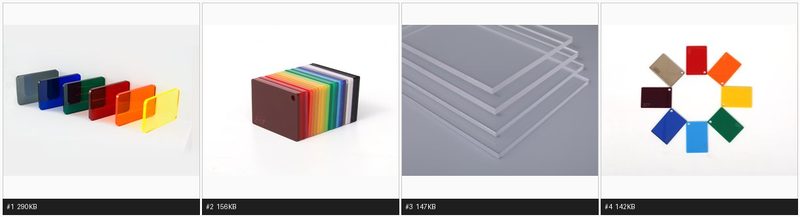
Specification
| Property | Specification |
|---|---|
| Light transmission | Up to 92% |
| Thickness | 1 mm – 30 mm |
| Widths | 1220 mm and 1830 mm standard; other widths to order |
| Weight | Approx. half that of glass for the same panel |
| UV stability | Inherent — no co-extruded layer required |
| Process options | Cast or extruded |
| Surface hardness | Significantly harder than uncoated polycarbonate |
| Impact behaviour | Cracks under heavy impact — specify polycarbonate if that matters |
Typical applications
- Retail display cases and shelving
- Picture framing and protective glazing
- Signage faces and lettering
- Furniture, fixtures and shop fitting
- Aquariums and water-retaining structures (thick cast)
Minimum order and lead time
This grade ships from 100 m² or 1 tonne — a trial pallet, not a full container. Standard sizes and stock colours run in 7–10 days; non-standard thickness or width in 12–18 days; add 3–7 days for CNC cut-to-size work. Quoted in USD on FOB, CIF or DDP terms. Full detail on the MOQ, lead time & shipping page.
Questions buyers ask
Is acrylic clearer than glass?
Yes. Acrylic reaches about 92% light transmission against roughly 90% for standard float glass, and it has no green edge tint. In a display cabinet the difference is visible.
How do I clean it without scratching?
Warm soapy water and a soft cloth. Never use ammonia-based glass cleaner or paper towel — both damage the surface. This is the most common cause of complaints we see, and it is entirely avoidable.
Will it crack if something hits it?
It can. Acrylic is roughly 10× more impact resistant than glass, but far below polycarbonate, and it fails by cracking. Where impact is likely, specify clear polycarbonate instead.