Cast Acrylic Sheet
The fabricator’s grade — machines cleanly, engraves sharply, flame-polishes to an optical edge.
Cast acrylic is polymerised between glass plates rather than pushed through a die. The resulting higher molecular weight is what fabricators are actually buying: it machines without gumming, engraves with sharp edges, and flame-polishes to genuine optical clarity.
If your workshop cuts, routes, drills or polishes acrylic, this is the grade to specify. Extruded sheet in the same operations softens, welds behind the cutter and leaves a hazy edge.
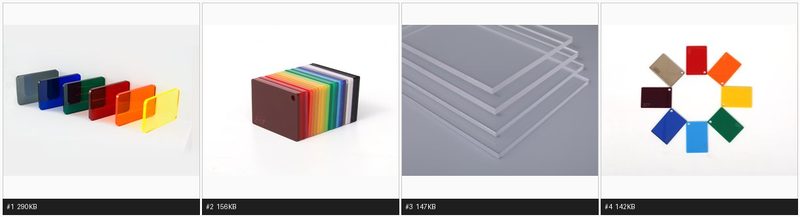
Specification
| Property | Specification |
|---|---|
| Process | Cell cast between glass |
| Thickness | 2 mm – 30 mm |
| Thickness tolerance | Approx. ±10% (inherent to casting) |
| Widths | 1220 mm and 1830 mm standard; other widths to order |
| Machining | Excellent — clean chip, no gumming |
| Flame polishing | Yes — produces an optically clear edge |
| Laser cutting | Yes — leaves a characteristic frosted edge |
| Chemical resistance | Better than extruded |
| Colours | Clear, opal, frosted, full colour range |
Cast against extruded, in the workshop
| Cast acrylic | Extruded acrylic | |
|---|---|---|
| Thickness tolerance | Looser (±10%) | Tighter (±5%) |
| Machining | Excellent — clean edges, polishes well | Fair — softens and gums at speed |
| Laser cutting | Frosted edge | Clear polished edge |
| Thermoforming | Wider forming window | Narrower, but easier at low temperature |
| Chemical resistance | Better | Lower |
| Cost | Higher | Lower |
The tolerance line surprises buyers: cast sheet is less dimensionally consistent than extruded, because casting cannot control thickness as tightly as a die. If your process depends on exact thickness — slot fitting, precise glazing pockets — extruded is the better choice despite being harder to machine.
Typical applications
- CNC machined components and prototypes
- Laser and router cut lettering and shapes
- Engraved awards, signage and plaques
- Bonded display cases and enclosures
- Thick-section fabrication, tanks and aquariums
Minimum order and lead time
This grade ships from 100 m² or 1 tonne — a trial pallet, not a full container. Standard sizes and stock colours run in 7–10 days; non-standard thickness or width in 12–18 days; add 3–7 days for CNC cut-to-size work. Quoted in USD on FOB, CIF or DDP terms. Full detail on the MOQ, lead time & shipping page.
Questions buyers ask
Why does my extruded acrylic melt when I cut it?
Extruded acrylic has a lower molecular weight and softens at lower temperature, so it gums behind the cutter. Cast acrylic is the correct material for machining work.
Can cast acrylic be laser cut?
Yes, and it cuts cleanly, but the edge comes out frosted rather than polished. For a clear laser-cut edge, extruded acrylic is the better choice.
What thickness tolerance should I expect?
Around ±10% is normal for cast sheet worldwide — it is a property of the process, not a quality defect. If you need tighter, order extruded or ask us to machine to thickness.